
Switchboard Upgrades Kapiti Coast: Why Your Old Fuse Board Could Be Costing You More Than You Think
Open the cupboard where your switchboard lives and take a proper look. If what you see is a row of ceramic fuses with small pieces of wire threaded through them, or a board so old that the labelling has faded beyond legibility, you’re looking at a problem that goes well beyond inconvenience. Across the Kāpiti Coast — in the older bungalows of central Waikanae, the mid-century homes of Paraparaumu, and the seaside properties of Raumati Beach — outdated fuse boards are more common than most homeowners realise. And many of the people living with them have no idea what they’re actually risking.
An outdated switchboard isn’t simply an annoyance that trips occasionally when you run the dishwasher and the kettle at the same time. In many cases, it’s an active safety hazard — one that can void your home insurance, cause electrical fires, and leave your household without the residual current device (RCD) protection that modern wiring standards require. The good news is that a switchboard upgrade is a relatively straightforward job for a licensed electrician, and the cost is modest compared to the risks of leaving an ageing board in place.
Roundhouse Electrical has upgraded switchboards in homes right across the Kapiti Coast for over eight years. Director Jamie Eades and his team understand the specific electrical heritage of Kāpiti’s housing stock — what to expect in a pre-1980s Waikanae villa, what a 1990s Paraparaumu new-build typically presents, and how to bring any property up to current New Zealand electrical safety standards with minimal disruption to your household. This guide covers everything you need to know: the warning signs, the process, the costs, and why acting sooner rather than later is nearly always the right call.
Key Takeaways
- Old ceramic or rewireable fuse boards are a genuine fire risk and are no longer compliant with current New Zealand electrical standards under AS/NZS 3000:2018.
- Many insurance companies will not pay out on fire claims if the damage is linked to an outdated, non-compliant switchboard — a fact that surprises most homeowners.
- Modern switchboards include RCD (residual current device) protection, which is required by the Electricity (Safety) Regulations 2010 for all new and upgraded installations in New Zealand.
- A switchboard upgrade on a typical Kapiti Coast residential property generally costs between $800 and $2,500 depending on the complexity of the existing wiring and the number of circuits required.
- The work must be carried out by a licensed electrical worker holding a current EWRB practising licence — it is illegal under the Electricity Act 1992 for an unlicensed person to perform this work.
- Roundhouse Electrical provides obligation-free quotes for all switchboard upgrades across the Kapiti Coast, from Porirua to Levin.
- A switchboard upgrade is often triggered by renovation work, new appliance installation, or an insurance requirement — but it’s worth doing proactively before any of these events force your hand.
- After upgrade completion, Roundhouse Electrical issues the appropriate electrical certificates required under New Zealand regulations, providing a documented compliance record for your property file.
The Difference Between an Old Fuse Board and a Modern Switchboard
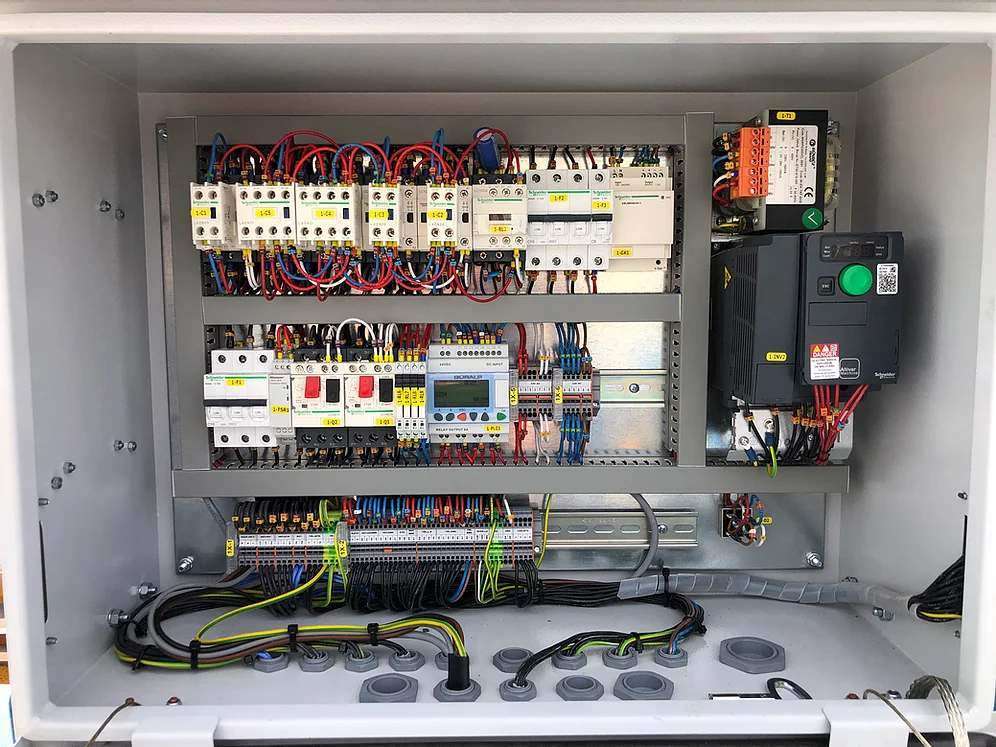
The terms fuse board and switchboard are often used interchangeably in conversation, but they describe fundamentally different technologies — and the difference matters enormously for safety.
A fuse board, as found in many older Kāpiti Coast homes, uses ceramic or rewireable fuses to protect each circuit. When a circuit is overloaded, the fuse wire melts, breaking the circuit. The problem is that these fuses offer no protection against earth faults — situations where electricity takes an unintended path to earth, potentially through a person. They also fail slowly and inconsistently, and they can be — and often are — incorrectly repaired by homeowners using wire that’s too thick for the rated circuit, effectively removing the protection entirely.
A modern compliant switchboard uses miniature circuit breakers (MCBs) in place of fuses, which trip instantly and reset cleanly, and residual current devices (RCDs) that detect earth fault currents as small as 30 milliamps — fast enough to prevent electrocution in most circumstances. This combination of MCB and RCD protection is what New Zealand’s electrical standards now require, and it represents a genuine, measurable improvement in household safety over anything an old fuse board can provide.
Warning Signs Your Kapiti Coast Home Needs a Switchboard Upgrade
Not every situation requiring a switchboard upgrade announces itself with sparks and burning smells. Many of the most important warning signs are quiet and easy to dismiss. Here’s what to look for.
You Have Ceramic Fuses or Rewireable Fuses
If your switchboard has ceramic holders with small fuse wires, or you’ve ever had to replace a length of fuse wire yourself after a trip, your board is well overdue for replacement. These systems were standard in New Zealand homes built before the 1970s and are still found in properties that have never had a full electrical upgrade. They provide no RCD protection whatsoever and are categorically non-compliant with current standards.
Your Circuits Trip Frequently
Regularly tripping circuits aren’t just inconvenient — they’re a symptom. Modern households run significantly more electrical load than a 1960s or 1970s home was ever designed to carry. Air conditioning, heat pumps, EV chargers, multiple large appliances, and home offices all draw sustained power that older wiring and switchboards weren’t designed to handle. Frequent tripping indicates an overloaded or undersized circuit that needs proper assessment and almost certainly an upgraded board with appropriately rated circuit protection.
You Have No RCD Protection
New Zealand’s Electricity (Safety) Regulations 2010 require RCD protection on all new and upgraded electrical installations. If your home has never had an electrical upgrade, there’s a strong chance it has no RCD protection at all — meaning there’s nothing between a faulty appliance or wiring fault and a potentially fatal electric shock. A licensed electrician can test your board in minutes to confirm whether RCD protection is present.
Your Insurance Company Is Asking Questions
An increasing number of New Zealand home insurers now ask directly about switchboard type and age as part of the underwriting process. Some policies exclude or severely limit coverage for fire damage linked to non-compliant electrical installations. If your insurer has flagged your board, or if you’re renewing your policy and concerned about what disclosure of an old fuse board might mean for your cover, a switchboard upgrade removes the issue entirely and permanently.
You’re Planning a Renovation, New Build Addition, or Major Appliance Installation
Any significant building work on a Kāpiti Coast property — a kitchen renovation, a bathroom addition, a new heat pump or EV charger installation — will typically trigger an electrical inspection that must certify compliance with current standards. If your existing switchboard doesn’t meet those standards, the upgrade becomes a prerequisite for the broader project. Addressing it proactively, before your builder and electrician are standing on site, saves time, money, and scheduling headaches.
Your Switchboard Looks or Smells Wrong
Scorch marks, a burning or plastic smell near the board, visible corrosion, or components that feel warm to the touch are all immediate red flags requiring urgent attention. These signs indicate active fault conditions rather than theoretical risk. If you notice any of these, call a licensed electrician immediately — this is not a situation to monitor and revisit.
What Does a Switchboard Upgrade Actually Involve?
Many homeowners put off a switchboard upgrade because they imagine it being a lengthy, disruptive process involving days without power and walls being opened up. In reality, for a standard residential upgrade on a typical Kapiti Coast property, the process is considerably more straightforward than that.
A Roundhouse Electrical switchboard upgrade begins with a proper assessment of your existing board and circuits — understanding what’s there, what condition it’s in, and what the upgraded installation needs to deliver. Jamie and the team will identify how many circuits your property requires, whether any additional circuits need to be added (common in older homes that have gained extra living spaces or appliances over the years), and what the optimal configuration for your new board looks like.
On the day of installation, power to the property is isolated at the mains — typically for three to six hours for a standard residential upgrade, though more complex installations in larger or older homes may take longer. The old board is removed, the new switchboard is installed and wired, circuit breakers and RCDs are fitted and tested, and all connections are verified. The work concludes with a full test of every circuit and the completion of the required electrical certification documentation.
That paperwork matters. Under New Zealand’s Electricity Act 1992 and the Electricity (Safety) Regulations 2010, all prescribed electrical work must be accompanied by an Electrical Certificate of Compliance (CoC) issued by the licensed electrical worker who performed it. Roundhouse Electrical provides this documentation as standard — it’s your legal record of compliant work, and it’s the document your insurance company, your mortgage lender, or a future property buyer may ask to see.
What Goes Into a Modern Compliant Switchboard?
Understanding what you’re getting in a new switchboard helps you have an informed conversation with your electrician and make sense of the quote you receive.
Miniature Circuit Breakers (MCBs)
MCBs replace the old ceramic or rewireable fuses. Each MCB protects a specific circuit — lighting, power outlets, the oven, the hot water cylinder, and so on — and trips instantly when a fault or overload is detected. Unlike fuse wire, an MCB simply needs to be reset after it trips, provided the underlying fault has been resolved. MCBs are rated in amperes to match the circuit they protect, and a properly designed switchboard ensures every circuit has the correctly rated breaker.
Residual Current Devices (RCDs)
RCDs are the critical safety innovation that old fuse boards lack entirely. An RCD monitors the current flowing out and returning through a circuit. If it detects even a tiny imbalance — as small as 30 milliamps, which is the threshold at which cardiac arrest becomes a real risk — it disconnects power in milliseconds. New Zealand’s Electricity (Safety) Regulations 2010 require RCD protection for all socket outlets in new and upgraded installations. In practice, a well-designed modern switchboard provides RCD protection across all circuits, not just socket outlets.
Surge Protection (Optional but Recommended)
Surge protection devices (SPDs) can be incorporated into a new switchboard installation to protect sensitive electronics — computers, smart TVs, heat pumps — from voltage spikes caused by lightning strikes or grid disturbances. On the Kāpiti Coast, where coastal weather patterns can produce localised electrical storms, SPDs are a relatively modest investment that can prevent the loss of expensive appliances. Roundhouse Electrical can advise whether SPD inclusion makes sense for your specific property and equipment during the initial assessment.
Switchboard Upgrades and Your Home Insurance: What You Need to Know
Home insurance and switchboard compliance is an area where many Kāpiti Coast homeowners are unknowingly exposed, and it’s worth understanding the issue clearly before assuming you’re covered.
Most New Zealand home insurance policies contain a general condition requiring the insured property to be maintained in a safe and sound condition and to comply with relevant laws and regulations. An old ceramic fuse board without RCD protection is, by any reasonable interpretation, a non-compliant installation under current New Zealand electrical regulations. If a fire originates from or is linked to your outdated switchboard, your insurer has potential grounds to decline or reduce the claim on the basis of that non-compliance.
Some insurers have gone further, now explicitly asking about switchboard type at renewal. IAG (which underwrites State and AMI policies), Tower, and other major New Zealand insurers have variously flagged old wiring and switchboards as risk factors that can affect coverage terms or premiums. Checking your specific policy wording and, if in doubt, asking your insurer directly whether your existing board affects your cover is strongly advisable.
The straightforward solution is a switchboard upgrade. Once completed, you have an Electrical Certificate of Compliance that documents the compliant installation — a document you can provide to your insurer with confidence.
What Does a Switchboard Upgrade Cost on the Kapiti Coast?
Pricing for switchboard upgrades varies depending on the size and age of the property, the complexity of the existing wiring, and the number of circuits required in the new board. The following ranges are indicative for typical residential properties across the Kāpiti Coast in 2026 and should be treated as a guide rather than a fixed quote — every property is different, and accurate pricing requires a proper on-site assessment.
Standard residential upgrade (older home, 8–12 circuits): $800–$1,500
Mid-size upgrade with additional circuits added (12–16 circuits): $1,200–$2,000
Larger or more complex upgrade (older villa, significant rewiring required, 16+ circuits): $1,800–$2,500+
These figures include labour, the new switchboard unit and components, testing, and the required Electrical Certificate of Compliance. They do not include any additional remediation work identified during the assessment — for example, damaged or deteriorating wiring that needs replacement before the new board can be safely commissioned.
For a precise, obligation-free quote specific to your Kāpiti Coast property, call Roundhouse Electrical on 021 515 292 or request a quote at roundhouseelectrical.co.nz/contact. Jamie and the team will assess your existing installation and provide transparent, upfront pricing before any work begins.
Older Kāpiti Coast Homes: What to Expect
The Kāpiti Coast’s housing stock tells the story of the region’s growth — from the seaside baches and post-war bungalows that line the coast through to the rapid residential expansion of the 1980s and 1990s and today’s new-build subdivisions spreading inland from Waikanae and Ōtaki. Each era of construction presents its own electrical characteristics, and a local electrician who has worked across all of them brings valuable contextual knowledge to every job.
Pre-1970s homes on the Kāpiti Coast frequently feature aluminium wiring rather than copper, rubber-insulated cables that have reached or exceeded their serviceable life, and switchboards that have been incrementally modified by different hands over the decades. Aluminium wiring requires particular attention during any upgrade — connections at outlets and switches need appropriate connectors to prevent oxidation and the fire risk it creates. These are not problems that stop an upgrade from proceeding, but they are factors that a thorough assessment will identify and that a proper scope of work will address.
Homes from the 1970s and 1980s often have early plastic-insulated wiring that remains serviceable but switchboards that have never been updated from their original single-pole breaker configuration — no RCDs, no earth leakage protection, minimal capacity for modern electrical loads. These are very common across Paraparaumu and Waikanae and represent the most straightforward switchboard upgrade scenarios.
1990s and early 2000s properties may have had a partial upgrade at some point — perhaps RCDs added to one or two circuits without a full board replacement. These partial upgrades are better than nothing but rarely meet current standards comprehensively, and a full assessment is the only reliable way to determine what level of protection is actually in place.
Why Choose Roundhouse Electrical for Your Switchboard Upgrade?
A switchboard upgrade is exactly the kind of job where the difference between a licensed professional and a cut-price alternative becomes apparent very quickly. The work has to be done right — not just because the regulations require it, but because the consequences of it being done wrong are serious and potentially irreversible.
Roundhouse Electrical brings over eight years of residential electrical experience across the Kāpiti Coast to every switchboard upgrade. Jamie Eades and Anthony Tamakehu hold current EWRB practising licences and perform all work to the AS/NZS 3000:2018 Wiring Rules standard. Every upgrade is completed with full electrical certification documentation, every circuit is tested before the job is signed off, and every customer receives honest, upfront pricing before work begins.
With 89 five-star Google reviews and a 5.0-star average, Roundhouse’s track record speaks directly to the quality of the team’s workmanship and communication. Customers consistently highlight punctuality, clean work, and clear explanations of what was found and what was done — qualities that matter enormously in a job that involves the safety of your home and family.
The team serves the full Kāpiti Coast corridor from Porirua to Levin, and after-hours callouts are available for genuine electrical emergencies. For switchboard upgrades, which are planned rather than emergency work, the team can typically schedule within one to two weeks and will provide a full assessment and obligation-free quote before any commitment is made.
Frequently Asked Questions — Switchboard Upgrades Kapiti Coast
How do I know if my switchboard needs upgrading?
The clearest indicators are ceramic or rewireable fuses (rather than modern circuit breakers), the absence of RCD protection, frequently tripping circuits, visible scorching or burning smells near the board, or an insurer flagging the board as a compliance concern. If you’re unsure, Roundhouse Electrical can assess your existing installation and give you an honest appraisal — call 021 515 292 to arrange a visit.
Is a switchboard upgrade legally required in New Zealand?
An existing switchboard is not automatically required to be upgraded simply because it is old. However, any new or upgraded electrical installation — including adding new circuits, installing new appliances with dedicated circuits, or undertaking renovation work requiring electrical work — must comply with the current AS/NZS 3000:2018 Wiring Rules and the Electricity (Safety) Regulations 2010, which include requirements for RCD protection. In practice, this means most renovation and new appliance projects trigger a switchboard upgrade as a prerequisite. Additionally, non-compliant switchboards can affect insurance cover, which makes proactive upgrading the sensible choice regardless of regulatory requirements.
How long does a switchboard upgrade take?
A standard residential switchboard upgrade on a typical Kāpiti Coast property takes approximately three to six hours, during which power to the property is isolated. More complex installations — larger homes, older properties with more extensive wiring assessments required, or upgrades that include additional circuit work — may take longer. Roundhouse Electrical will give you an accurate time estimate as part of your obligation-free quote so you can plan accordingly.
Will I need to be home during the upgrade?
Yes, someone needs to be on site for the duration of the work, as power will be isolated to the property and access to the switchboard and potentially other areas of the home is required. It’s also useful for you to be available to discuss any findings or decisions that arise during the job. Roundhouse Electrical will confirm all logistics with you when scheduling the work.
What certification do I receive after the upgrade?
Upon completion of your switchboard upgrade, Roundhouse Electrical issues an Electrical Certificate of Compliance (CoC) as required under New Zealand’s Electricity Act 1992 and the Electricity (Safety) Regulations 2010. This document confirms that the work was performed by a licensed electrical worker and meets the required standards. Keep this document with your property records — it may be requested by your insurer, your mortgage lender, or a prospective buyer when you sell the property.
Does Roundhouse Electrical cover my area?
Roundhouse Electrical services the full Kāpiti Coast corridor from Porirua in the south to Levin in the north, including Waikanae, Paraparaumu, Raumati, Paekākāriki, Peka Peka, Te Horo, Ōtaki, and all surrounding suburbs. If you’re unsure whether your address is within the service area, call 021 515 292 and the team will confirm.
Get Your Kapiti Coast Switchboard Assessed Today
An outdated switchboard is one of those risks that’s easy to put off addressing — right up until it becomes impossible to ignore. Whether you’ve spotted the warning signs, your insurer has raised concerns, or you’re simply ready to bring your Kāpiti Coast home up to current electrical safety standards, Roundhouse Electrical is ready to help.
Contact Jamie and the team for an obligation-free switchboard assessment and quote. Transparent pricing, full certification on completion, and the track record of 89 five-star reviews behind every job.
📞 Call: 021 515 292
✉️ Email: jamie@roundhouseelectrical.co.nz
🌐 Free quote: https://roundhouseelectrical.co.nz/contact
🕒 Hours: Mon–Fri 8am–5pm | After-hours & weekend callouts available
📍 Service area: Porirua to Levin – Waikanae, Paraparaumu, Raumati, Ōtaki and all surrounding suburbs
Source Links
Electricity Act 1992 — New Zealand Legislation – https://www.legislation.govt.nz/act/public/1992/0122/latest/whole.html
Electricity (Safety) Regulations 2010 — New Zealand Legislation – https://www.legislation.govt.nz/regulation/public/2010/0036/latest/whole.html
AS/NZS 3000:2018 Wiring Rules — Standards New Zealand – https://www.standards.govt.nz/
Electrical Workers Registration Board (EWRB) — Licencing – https://www.ewrb.govt.nz/
WorkSafe New Zealand — Electrical Safety in the Home – https://www.worksafe.govt.nz/topic-and-industry/electrical-safety/
Energy Safety — Ministry of Business, Innovation and Employment (MBIE) – https://www.mbie.govt.nz/building-and-energy/energy/energy-safety/
Kāpiti Coast District Council — Building Consents – https://www.kapiticoast.govt.nz/services/building-and-resource-consents/building-consents/
Consumer NZ — Home Electrical Safety – https://www.consumer.org.nz/
About Roundhouse Electrical
Roundhouse Electrical is a locally owned and operated electrical company based in Waikanae on the Kāpiti Coast. Led by director Jamie Eades, the team has been delivering safe, compliant, and reliable electrical services to homeowners and businesses across the Kapiti Coast for over eight years. With 89+ five-star Google reviews, full EWRB licensing, police-checked staff, and after-hours availability, Roundhouse Electrical is the Kapiti Coast’s trusted choice for residential and light commercial electrical work — from Porirua to Levin.
📞 021 515 292 | roundhouseelectrical.co.nz